Key Takeaways
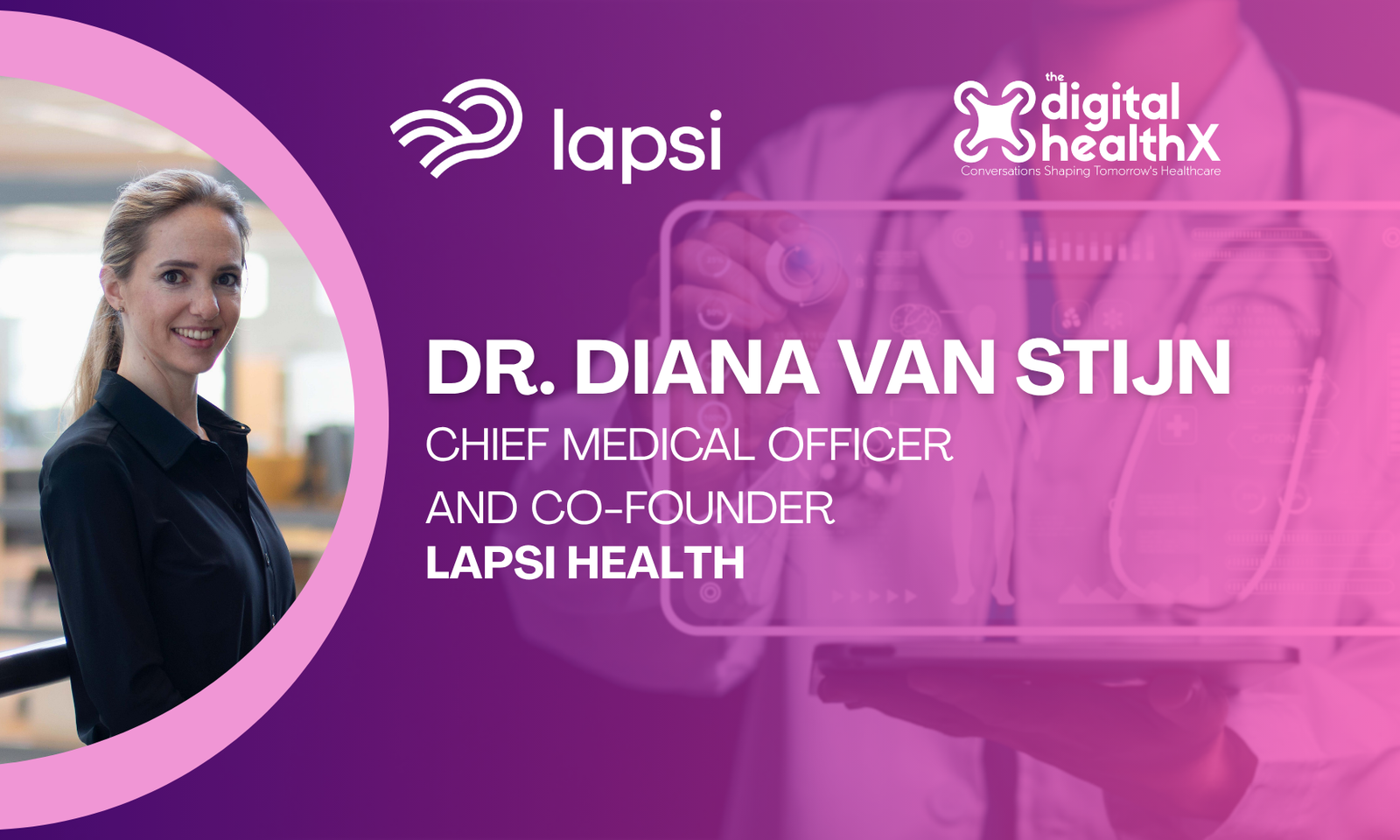
- Dr. Diana van Stijn, Chief Medical Officer and Co-Founder of Lapsi Health, shares her vision for the future of digital healthcare.
- She explores how contextual AI and interoperability can move healthcare beyond fragmented, standalone AI solutions.
- Diana discusses Lapsi Health’s collaboration with Redox and the importance of bringing clinical context directly into existing EHR workflows.
- She explains why documentation, diagnostics, clinical evidence, coding, and patient history need to work together rather than operate in silos.
- A key focus is building trust in clinical AI, with rigorous validation, governance, security, and transparency placed at the center of development.
- Looking ahead, Diana envisions connected clinical ecosystems that reduce cognitive burden and give physicians the right information at the right time.
- Her message is clear: the future of healthcare AI is not about deploying more tools, but about making them work intelligently together while keeping clinicians and patients at the center.
Philip: Lapsi Health recently announced its collaboration with Redox to embed the Keikku Clinical Platform directly into EHR workflows. What strategic gap in today’s healthcare ecosystem does this partnership address, and why is seamless workflow integration critical for accelerating enterprise AI adoption?
Diana: When people hear about our collaboration with Redox, they naturally think about interoperability, and that’s certainly part of the story. But I think interoperability is often misunderstood.
Connecting systems is only the first step. Redox gives us the ability to connect with existing EHR infrastructure, but connectivity alone does not solve healthcare’s biggest challenge. The real opportunity lies in context.
Today, patient information exists across countless systems. We can move data from one place to another, but unless that information is connected in a clinically meaningful way, physicians are still responsible for reconstructing the patient’s story themselves.
A patient might receive care at one hospital and then present to another a month later. Even when records are available, they rarely provide a complete clinical picture. Longitudinal laboratory trends, prior imaging findings, specialist recommendations, and the reasoning behind previous clinical decisions often remain fragmented across different systems. Physicians spend valuable time piecing those fragments together instead of caring for the patient in front of them.
Our vision extends beyond interoperability. We want to create contextual interoperability, where documentation, patient history, evidence, coding, diagnostics, and the EHR continuously inform one another throughout the encounter. The objective is not simply to exchange data, but to preserve the clinical context that gives that data meaning.
Ultimately, the goal is not another connected application. It is a connected clinical experience where patients no longer feel like they have to repeat their story at every point of care, and physicians have the information they need to make informed decisions without searching across multiple systems.
I believe this is where enterprise AI is heading. Organizations will not differentiate themselves by how many AI tools they own. They will differentiate themselves by how effectively those tools share clinical context to support better decisions, better workflows, and ultimately better patient care.
Philip: Many healthcare organizations continue to struggle with fragmented AI solutions that require clinicians to switch between multiple applications. How does integrating documentation, clinical reference, and diagnostic support into existing EHR environments redefine the clinician experience while reducing administrative burden?
Diana: As physicians, we never diagnose a patient using a single data point. We don’t look at one laboratory value and make a decision. We synthesize the patient’s history, physical examination, imaging, laboratory findings, medications, prior diagnoses, and our own clinical experience before determining the best course of action. Clinical reasoning has always been contextual.
Ironically, many of today’s AI solutions ask clinicians to work in exactly the opposite way. Documentation lives in one application. Clinical reference exists in another. Coding requires a separate platform, while diagnostic support often sits somewhere else entirely. Instead of reducing complexity, these tools require physicians to become the integrators, mentally stitching together information that should already be connected.
That fragmentation creates unnecessary cognitive burden. Clinicians are not looking for another application to manage. They want technology that fits naturally into the way they already practice medicine. Just as we connect a patient’s history with physical examination findings and diagnostic testing to arrive at a diagnosis, our technology should be capable of doing the same. Unfortunately, most AI solutions still operate in isolation, leaving physicians to bridge those gaps themselves.
Now imagine a different approach. Documentation informs clinical reference. Clinical reference informs diagnostic reasoning. Coding reflects what occurred during the encounter, while structured information flows directly into the EHR without requiring physicians to recreate work they have already done. Each capability builds upon the others because they all share the same clinical context.
That is the fundamental difference between adding AI to healthcare and designing AI around healthcare. Instead of asking physicians to adapt to fragmented technology, the technology adapts to the way physicians already think, allowing them to focus less on navigating software and more on delivering care.
Philip: In your recent perspective, you emphasize that “the burden of proof belongs to us,” highlighting the responsibility of AI developers to earn clinicians’ trust. How does this philosophy influence the way Lapsi Health develops, validates, and deploys clinical AI solutions?
Diana: I do not believe physicians should be responsible for determining whether an AI system is trustworthy.
If you asked me to explain the engineering behind a CT scanner or an MRI, I could not describe every technical detail. What I do know is when to order each test, how to interpret the results, and how to use that information to care for my patient. I trust those technologies because they have been rigorously developed, validated, and held to a high clinical standard. AI should be no different.
Too often, the conversation centers on teaching clinicians how to evaluate AI. Physicians should absolutely understand the capabilities and limitations of the tools they use, but they should not bear the responsibility of validating them. Their responsibility is, and always should be, caring for patients. The responsibility for proving that an AI system is safe, reliable, and clinically useful belongs to the people building it.
That philosophy influences every decision we make at Lapsi Health. We do not pursue validation, governance, or regulatory compliance simply because they are required. We pursue them because healthcare demands them. Clinical AI should earn trust through evidence, transparency, and measurable performance before it ever reaches the bedside.
Our hope is that this mindset becomes the standard across the industry. Healthcare has never accepted “trust us” as sufficient evidence for a new therapy, medical device, or diagnostic test, and AI should not be held to a lower standard simply because it is software.
Ultimately, I believe the organizations that earn the confidence of clinicians will shape the future of healthcare AI. Innovation alone will never be enough. In medicine, trust has always been earned, and I believe AI should be held to that same expectation.
Philip: Clinical AI adoption is increasingly shifting from standalone productivity tools to integrated clinical decision support. How do you envision contextual AI, where documentation, patient history, diagnostics, and evidence-based references work together, changing day-to-day clinical decision-making over the next five years?
Diana: I believe we are approaching a transformation that extends far beyond documentation.
Most AI solutions today are designed to improve a single task. They write notes faster, summarize information, or answer clinical questions. Those are meaningful advances, but they represent only one piece of a much larger opportunity.
The next generation of AI will not simply process documentation. It will understand the patient encounter itself.
In medicine, we often use the term gestalt. It describes the ability to synthesize countless pieces of information into sound clinical judgment. It is not something that can be taught from a textbook. Rather, it is developed through years of experience and thousands of patient encounters. An experienced physician recognizes patterns, weighs competing possibilities, and arrives at a diagnosis by considering the patient as a whole rather than focusing on isolated findings. That is the direction I believe clinical AI should move toward.
Imagine an encounter where the conversation becomes the foundation for everything that follows. Documentation is generated automatically. Relevant evidence surfaces within the clinical context. Coding accurately reflects the encounter. Diagnostic support incorporates what was said, what was observed, and what already exists within the patient’s longitudinal medical history. Rather than functioning as separate applications, each capability contributes to a single, evolving understanding of the patient.
Importantly, none of this replaces physician judgment. AI should not make decisions on behalf of clinicians. Its role is to reduce cognitive burden by organizing information, identifying relevant evidence, and presenting meaningful clinical context at the right moment. The physician remains responsible for interpreting that information, weighing the nuances of the case, and making the final clinical decision.
That represents a fundamentally different future than simply building a faster scribe. It is a future where AI becomes part of the clinical infrastructure itself, quietly supporting physicians throughout the entire patient journey instead of assisting with only one task at a time.
Philip: As healthcare organizations evaluate AI platforms, concerns around interoperability, data privacy, regulatory compliance, and clinical accuracy remain top priorities. How does Lapsi Health balance innovation with the rigorous governance and evidence standards required for enterprise healthcare deployment?
Diana: I think healthcare has created a false choice between moving quickly and building responsibly. In reality, healthcare demands both.
When a health system invests in AI, it is not simply purchasing another software platform. It is making a long-term decision that affects patient care, clinician workflows, organizational trust, and ultimately clinical outcomes. That responsibility requires a very different approach to product development than what we often see in traditional technology.
At Lapsi Health, governance is not something we address after a product is built, nor is interoperability an integration challenge solved later. Clinical evidence, regulatory compliance, security, transparency, and validation are foundational design principles that influence every stage of development. They are part of the architecture from the beginning because they are essential to delivering technology that clinicians and healthcare organizations can rely on.
Innovation and governance should never compete with one another. In healthcare, they are inseparable. The most valuable innovations are the ones that organizations feel confident deploying at scale because they have been developed responsibly and validated rigorously.
Technology will continue to evolve rapidly, but trust is earned much more deliberately. I believe the organizations that recognize this distinction will define the next generation of healthcare AI, not because they moved the fastest, but because they built systems clinicians and patients are willing to trust.
Philip: Redox’s interoperability network significantly expands connectivity across healthcare organizations and EHR systems. How does this collaboration strengthen Lapsi Health’s long-term enterprise growth strategy, and what opportunities does it unlock for health systems looking to scale AI adoption?
Diana: I do not view Redox as the destination. I view it as an enabler.
Interoperability allows us to meet health systems where they already are rather than asking them to replace or rebuild the infrastructure they have spent years developing. That lowers the barrier to adoption, but more importantly, it creates the foundation for something much bigger.
One of healthcare’s greatest challenges is that clinical information remains trapped in silos. Patient data exists across EHRs, imaging systems, laboratory platforms, and countless other applications that rarely communicate in meaningful ways. Those gaps contribute to duplicated testing, unnecessary healthcare costs, fragmented care, and ultimately place a greater burden on clinicians who are left assembling the patient’s story themselves.
The last thing healthcare needs is another collection of disconnected AI products, each with its own dashboard, workflow, and isolated dataset. Adding more point solutions only creates another layer of fragmentation.
Once systems are connected, the real opportunity begins. Clinical context can move with the patient rather than remaining confined to individual applications. Documentation can inform clinical reference. Clinical reference can strengthen diagnostic reasoning. Coding can accurately reflect the encounter. Every capability becomes more intelligent because it is working from the same understanding of the patient rather than from isolated pieces of information.
That is why I believe enterprise healthcare will continue moving away from point solutions and toward connected clinical ecosystems. Health systems are not looking for ten different AI vendors solving ten separate problems. They are looking for platforms that integrate naturally into existing workflows, scale across the organization, and become more valuable as additional capabilities are added over time.
That is the vision driving Keikku. Redox enables the connection, but our long-term goal is to build an intelligent clinical ecosystem where every interaction strengthens the next, giving clinicians a more complete picture of the patient and helping health systems deliver more coordinated, efficient, and informed care.
Philip: Ambient documentation, AI-assisted clinical reasoning, and digital diagnostics are converging into a unified clinical workflow. Which of these capabilities do you believe will have the greatest impact on clinician efficiency and patient outcomes, and why?
Diana: I do not believe any one of these capabilities will have the greatest impact on its own. Asking which is most important is a little like asking a physician whether laboratory results are more valuable than imaging or the patient’s history. None of those pieces of information are sufficient independently. Clinical decisions come from bringing them together, understanding how they relate to one another, and interpreting them within the context of the individual patient. I believe AI should work the same way.
Documentation without context has limited value. Diagnostic support without an understanding of the patient’s history has limited value. Clinical evidence, no matter how robust, has limited value if it is disconnected from the encounter taking place in front of the physician. Each capability becomes significantly more valuable when it builds upon the others rather than functioning as an isolated tool.
That philosophy has guided how we have approached Keikku from the beginning. We have never set out to build individual AI products. Our goal has been to create a connected clinical ecosystem where documentation, clinical reasoning, evidence, coding intelligence, diagnostics, and the patient’s medical history continuously inform one another throughout the encounter.
When information is connected in this way, physicians spend less time searching, switching between applications, and reconstructing clinical context. Instead, they are able to focus on what matters most: interpreting the information, applying their clinical judgment, and caring for the patient. Ultimately, the greatest opportunity is not making any one task faster. It is helping clinicians make better-informed decisions because every relevant piece of information is working together rather than competing for their attention.
Philip: Looking ahead, what emerging trends in clinical AI, interoperability, and digital healthcare should healthcare executives and technology leaders be preparing for as they build the next generation of intelligent care delivery platforms?
Diana: I believe we are entering the era of clinical ecosystems.
The first generation of healthcare AI focused on solving individual problems. We saw separate tools for documentation, coding, clinical reference, ambient listening, diagnostics, and workflow automation. Those innovations demonstrated what AI could do, but they also introduced a new challenge by creating yet another layer of fragmentation. The next generation will not be defined by individual capabilities. It will be defined by how intelligently those capabilities work together.
Healthcare executives should expect AI to become increasingly contextual, personalized, and deeply embedded within clinical workflows. Success will no longer be measured by the number of AI tools an organization has deployed. It will be measured by whether those technologies share information, understand clinical context, and support physicians without creating additional complexity.
I also believe we will see a shift toward clinician-led innovation. Healthcare is unlike any other industry because every workflow, every decision, and every interaction carries clinical consequences. Building meaningful AI requires more than technical expertise. It requires a deep understanding of how medicine is practiced and how clinicians think. The people designing these systems must appreciate the realities of patient care, not simply the mechanics of software development.
Equally important is ensuring patients remain part of this transformation. Trust in AI is not built solely within healthcare organizations. It is built one patient interaction at a time. Patients deserve transparency about how AI is being used, what role it plays in their care, and where clinical responsibility remains. AI should never become a black box operating behind the scenes. It should be another trusted clinical tool that helps physicians explain, educate, and make more informed decisions alongside their patients.
I often compare it to how we discuss other medical technologies today. If I order an ultrasound or a CT scan, I explain why I chose that test and how its findings contribute to my clinical decision. AI should be no different. In the future, I expect physicians to say, “Your laboratory results are reassuring, but based on your history, your examination, and validated predictive models, I believe you are at high risk of developing sepsis over the next twelve hours. That is why I recommend admitting you for closer monitoring.” The physician remains responsible for the decision, while AI strengthens the clinical insight supporting it.
That is ultimately the future we are building toward at Lapsi Health. We envision an intelligent clinical ecosystem where documentation, clinical reasoning, evidence, coding intelligence, diagnostics, interoperability, and future capabilities continuously learn from one another, creating a richer understanding of every patient encounter. The goal has never been to replace physicians. It is to equip them with better information, delivered at the right moment, so they can do what they have always done best: care for patients.
About Dr. Diana van Stijn
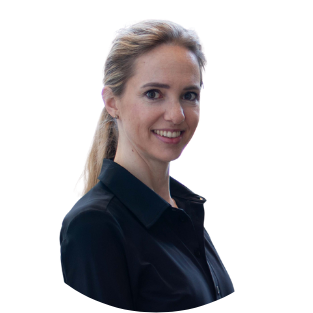
Dr. Diana van Stijn is Chief Medical Officer and Co-Founder of Lapsi Health, where she is helping redefine how clinicians examine, understand, and monitor patients through innovative sound-based medical technology. A physician and researcher with a background in pediatric cardiology, she brings together clinical expertise, medical innovation, and digital health to bridge the gap between emerging technology and real-world patient care.
At Lapsi Health, Diana is driving the development of next-generation tools that aim to make clinical examination more intelligent, accessible, and actionable. Her work reflects a strong belief that technology should not replace the clinician, but empower them with better insights and smarter tools at the point of care.
Keywords: Dr. Diana van Stijn, Lapsi Health, clinical AI, contextual AI, healthcare interoperability, connected clinical ecosystems, digital health, healthcare AI, clinical decision support, EHR integration, AI in healthcare, clinical innovation, enterprise AI, healthcare technology, digital healthcare, clinical AI trust, AI governance, medical AI, intelligent healthcare, Keikku Clinical Platform, Redox interoperability, clinician-led innovation, AI-enabled healthcare, future of digital health.