Introduction
Cardiovascular disease remains the leading cause of death worldwide, but the way individuals detect, monitor, and manage heart health is undergoing a fundamental transformation. Smartphones, wearables, and AI-powered platforms have turned everyday devices into clinical-grade tools capable of catching irregular heart rhythms, tracking blood pressure, and flagging early warning signs long before a cardiac event occurs. As consumers and health systems alike embrace this mobile-first, prevention-focused approach to cardiac care, digital health companies are redefining what it means to protect a heart.
Powered by artificial intelligence, continuous biosensor data, and cloud-connected care platforms, today’s leading cardiovascular health apps go far beyond simple heart-rate tracking. They deliver clinical-grade ECG analysis, AI-driven arrhythmia detection, remote patient monitoring for heart failure, and direct access to cardiologist review, enabling both individuals and care teams to intervene earlier and more precisely than ever before.
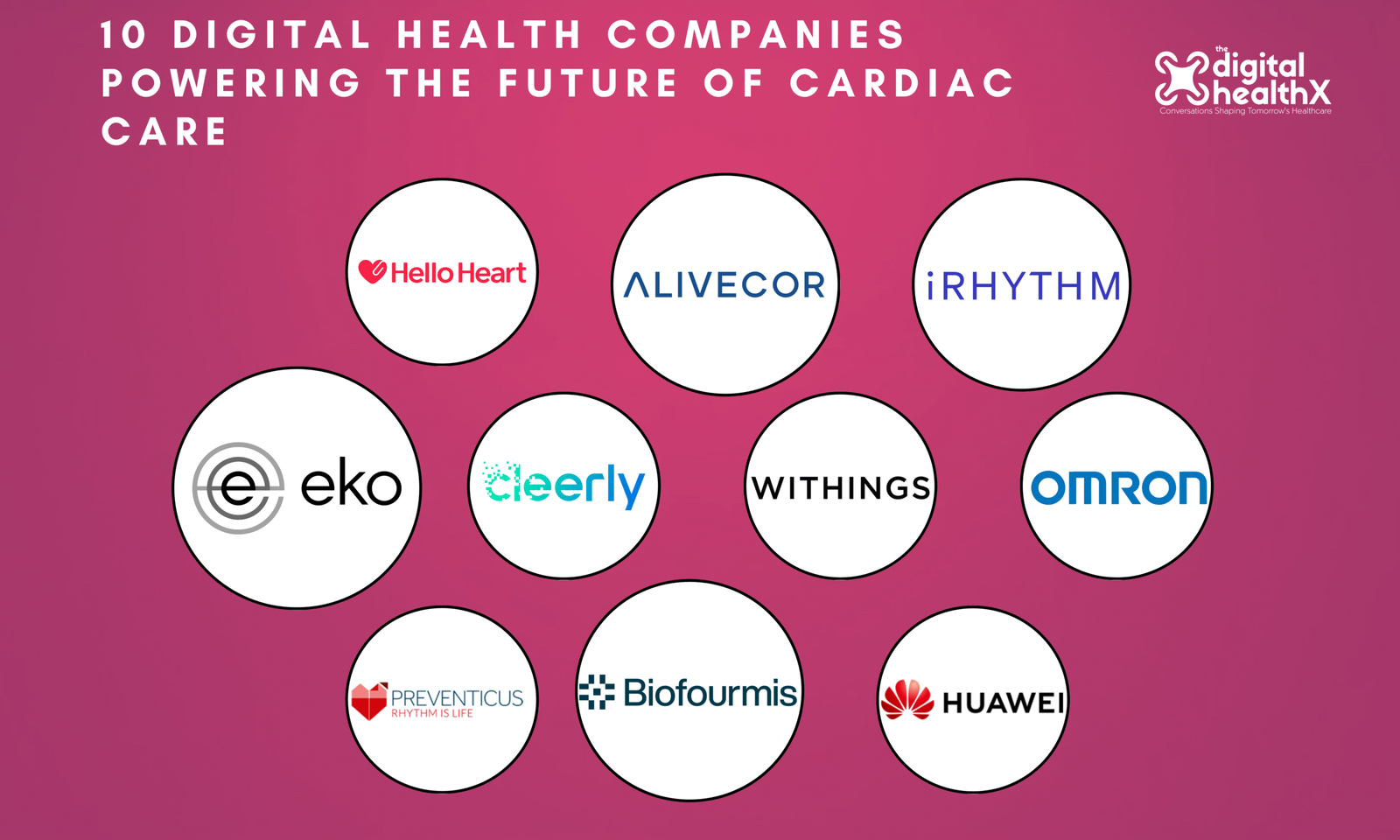
In this World Heart Day special report, The DigitalHealthX presents 10 Leading Digital Health Companies with Apps for Cardiovascular Disease that are redefining how heart health is detected, monitored, and managed worldwide. Selected for their clinical validation, technological innovation, global reach, and impact on patient outcomes, these companies are shaping the future of cardiovascular care and accelerating the shift toward earlier detection, continuous monitoring, and truly personalized heart health.
Executive Summary
The global digital health market for cardiovascular care is expanding rapidly, driven by the rising global burden of heart disease, growing consumer awareness, advances in AI-powered diagnostics, and increasing demand for accessible, preventive cardiac care. Mobile applications and connected devices have evolved from simple fitness trackers into sophisticated clinical tools that support arrhythmia screening, blood pressure management, heart failure monitoring, and virtual cardiology care, making them an increasingly essential part of modern cardiovascular medicine.
This report from The DigitalHealthX highlights 10 companies leading innovation across the cardiovascular digital health ecosystem, spanning World Heart Day, Sept 29. The featured organizations span diverse segments of cardiac care, including consumer ECG pioneers such as AliveCor and iRhythm Technologies, AI-driven diagnostic innovators including Eko Health and Cleerly, condition-specific digital therapeutics like Hello Heart and Biofourmis, connected consumer devices from Withings and Omron Healthcare, hardware-free screening tools such as Preventicus Heartbeats, and global wearable ecosystems led by Huawei Health. Together, these companies demonstrate how digital tools are empowering both patients and clinicians with earlier detection, continuous monitoring, and more personalized cardiac care.
A defining trend across the companies featured in this report is the convergence of AI-powered diagnostics, clinical-grade biosensors, remote patient monitoring, and telehealth-enabled care pathways. These technologies are enabling a shift from reactive, episodic cardiac care toward proactive, continuous heart health management, delivering real-time risk detection and seamless connectivity between patients, devices, and care teams.
As healthcare continues to shift toward preventive, patient-centered, and digitally connected models, cardiovascular health applications are becoming indispensable tools for patients, health systems, payers, and employers alike. The companies featured in this report are not only advancing clinical innovation but also redefining how individuals engage with their heart health. Their continued investment in AI-driven diagnostics, interoperability, and accessible screening technologies positions them at the forefront of the global effort to reduce the burden of cardiovascular disease.

Hello Heart
Hello Heart has built the only digital therapeutic platform designed exclusively around cardiovascular health, combining a connected blood pressure cuff with an AI-driven coaching app. Rather than treating heart health as one module inside a broader wellness suite, the company has made hypertension and cardiometabolic risk its entire focus, working primarily through employer and health-plan partnerships in the US.
Why Hello Heart Made the List
Hello Heart earns its place by proving that a single-condition focus can outperform generalist health apps. Its AI engine personalizes nudges based on what members actually respond to, and its clinical outcomes data has been published in peer-reviewed health economics journals, giving it credibility that many consumer apps lack.
Key Products
- Hello Heart connected blood pressure monitor
- Hello Heart mobile app
- Pill Box by Hello Heart (smart medication adherence tool)
Health & Wellness Features
- Blood pressure and cholesterol tracking
- Weight and activity monitoring
- AI-personalized nutrition and exercise coaching
- Medication adherence reminders and tracking
- Risk trend visualization aligned with clinical guidelines
Digital Health Ecosystem
Hello Heart’s platform ties together its hardware, app, and Pill Box into a single feedback loop: readings flow into the app, the AI coach translates them into daily actions, and eligible members get medication support layered on top — creating a continuous, closed system rather than a one-off tracking tool.
Competitive Strengths
- Deepest single-condition focus in cardiovascular digital health
- Strong enterprise/payer distribution model
- Published clinical outcomes data
- Personalization engine tuned to individual engagement patterns
Outlook
As employers and payers increasingly demand measurable ROI from digital health benefits, Hello Heart’s narrow-but-deep positioning gives it room to expand into adjacent cardiometabolic conditions while staying anchored to its outcomes-driven reputation.

AliveCor
AliveCor turned the smartphone into a clinical-grade ECG device over a decade ago and has since become the world’s most recognized name in consumer cardiac monitoring. Its KardiaMobile line has recorded over 350 million ECGs globally, and its newest Kardia 12L system brings portable 12-lead ECG capability — typically hospital-only technology — into a pocket-sized device.
Why AliveCor Made the List
AliveCor pioneered the category of consumer-initiated ECG and has stayed ahead through continuous AI advancement. Its Kardia 12L can help identify 39 cardiac conditions, and the company has built a genuine bridge between consumer self-monitoring and enterprise clinical workflows — something few competitors have replicated at scale.
Key Products
- KardiaMobile
- KardiaMobile 6L
- KardiaMobile Card
- Kardia 12L
- KardiaCare subscription (physician ECG review)
Health & Wellness Features
- 30-second medical-grade ECG recordings
- AI-powered detection of atrial fibrillation, bradycardia, and tachycardia
- KardiaAlert change-detection notifications
- Cardiologist-reviewed reports via subscription
- Enterprise remote monitoring for health systems and payers
Digital Health Ecosystem
The Kardia app anchors a broader ecosystem that spans consumer devices, KardiaCare’s clinician review layer, and Kardia Pro for enterprise remote patient monitoring — plus recent partnerships extending into cardiometabolic care through chronic disease platforms like Diathrive Health.
Competitive Strengths
- Largest proprietary ECG dataset in the industry
- Trusted brand with FDA-cleared devices
- Dual consumer and enterprise revenue model
- Global reach reinforced through charity and health-system partnerships
Outlook
With cardiac AI diagnostics expected to keep expanding, AliveCor’s enormous ECG dataset positions it well to refine its algorithms further — though it continues to navigate a competitive landscape shaped by Apple Watch’s built-in ECG feature.

iRhythm Technologies (Zio / MyZio)
iRhythm redefined ambulatory cardiac monitoring with its Zio patch — a discreet, wire-free wearable sensor that replaced the cumbersome Holter monitors patients once had to wear for arrhythmia diagnosis. Its companion MyZio app extends the experience to patients directly, while its ZioSuite platform serves clinicians.
Why iRhythm Made the List
iRhythm’s diagnostic yield and patient compliance numbers set the clinical benchmark in ambulatory monitoring. Physicians agree with its reports at a very high rate, and the platform has processed data from millions of patients, making it one of the most clinically validated cardiac monitoring companies on this list.
Key Products
- Zio Monitor / Zio XT / Zio AT patches
- MyZio patient app
- ZioSuite clinician web portal
Health & Wellness Features
- Continuous ECG monitoring for up to 14 days
- Digital symptom logging and reminders
- AI-assisted arrhythmia detection (ZEUS System)
- End-of-wear physician reports
- Cardio-kidney-metabolic risk assessment
Digital Health Ecosystem
iRhythm connects patients, technicians, and physicians through one workflow: the Zio patch captures data, the MyZio app supports patient engagement during wear, and ZioSuite gives clinicians a streamlined path from registration to diagnosis — all integrated with major EHR systems including Epic.
Competitive Strengths
- Superior diagnostic yield over legacy Holter monitors
- High patient compliance due to comfortable, water-resistant design
- Deep clinical validation and regulatory clearances across multiple markets
- Strong EHR and health-system integration
Outlook
As the digital health cardiovascular market continues its rapid growth, iRhythm’s position as the clinical gold standard for ambulatory ECG monitoring gives it a durable moat, even as newer AI-native entrants compete for the same diagnostic use cases.

Eko Health
Eko Health has reimagined one of medicine’s oldest tools — the stethoscope — as an AI-powered diagnostic platform. By layering machine learning onto digital heart-sound and single-lead ECG data, Eko has shown it can help detect serious conditions like reduced ejection fraction, a key marker of heart failure risk, during a routine physical exam.
Why Eko Made the List
Eko earns its spot by proving AI can meaningfully upgrade point-of-care diagnostics rather than just consumer wellness tracking. Its 2025 clinical validation study demonstrated real diagnostic power, and its inclusion in TIME’s World’s Top HealthTech Companies list reflects growing recognition of its clinical impact.
Key Products
- Eko CORE and DUO digital stethoscopes
- Eko app and cloud analysis platform
- AI murmur and arrhythmia detection algorithms
Health & Wellness Features
- Combined ECG and heart-sound analysis
- AI-assisted detection of heart murmurs and arrhythmias
- Early screening for reduced ejection fraction
- Cloud-based recording storage and sharing for clinicians
Digital Health Ecosystem
Eko’s platform is built for the clinical point of care: recordings captured through its stethoscopes sync to its app and cloud platform, where AI models flag risk indicators clinicians can act on immediately, integrated into existing exam workflows rather than requiring new infrastructure.
Competitive Strengths
- Reinvents a universally trusted clinical tool rather than replacing it
- Strong clinical validation published in cardiology journals
- Backing from a former US Surgeon General as a medical advisor
- Recognized innovation credentials (TIME HealthTech list)
Outlook
As AI-enabled diagnostics move from pilot to embedded workflow across health systems, Eko is well positioned to become a standard point-of-care tool for early heart failure and arrhythmia screening in primary care settings.

Cleerly
Cleerly has built an AI-driven diagnostic imaging platform focused specifically on detecting coronary artery disease — one of the leading causes of heart attacks worldwide. Rather than relying on traditional stenosis-only readings, Cleerly’s technology analyzes plaque characteristics from CT scans to give a fuller picture of cardiovascular risk.
Why Cleerly Made the List
Cleerly stands out for tackling the diagnostic gap in coronary artery disease, a condition often missed until a cardiac event occurs. Its AI-driven approach to imaging interpretation represents one of the more clinically ambitious applications of AI in cardiology today.
Key Products
- Cleerly AI-powered coronary CT angiography analysis platform
- Cleerly clinician-facing reporting dashboard
Health & Wellness Features
- AI-based plaque characterization and quantification
- Coronary artery disease risk staging
- Detailed, standardized diagnostic reporting for physicians
- Support for earlier, more personalized treatment decisions
Digital Health Ecosystem
Cleerly integrates into existing cardiac imaging workflows, taking CT angiography data that would otherwise be manually interpreted and running it through AI models to generate structured, consistent risk reports that clinicians can act on immediately.
Competitive Strengths
- Deep specialization in coronary artery disease, an underserved diagnostic niche
- AI-driven consistency versus variable manual image interpretation
- Strong ties to leading cardiology research institutions
- Positioned at the intersection of imaging and preventive cardiology
Outlook
With cardiovascular imaging increasingly seen as a frontier for AI-assisted diagnostics, Cleerly is well placed to expand from specialty cardiology centers into broader preventive care as evidence for AI-driven plaque analysis continues to build.

Withings
Withings has spent over a decade building connected health devices that quietly double as diagnostic tools, and its 2025 Cardio Check-Up service pushed that further into telemedicine. Through its companion app, subscribers using ECG-enabled Withings devices can now access professional evaluations of their cardiac data without visiting a clinic.
Why Withings Made the List
Withings made the list by connecting consumer hardware directly to real clinical evaluation — closing the loop between passive tracking and an actual medical opinion. It’s one of the clearest examples of telemedicine and connected devices converging inside a single app experience.
Key Products
- Withings ScanWatch and BPM Connect devices
- Withings Health Mate app
- Cardio Check-Up telemedicine service (Withings Plus subscription)
Health & Wellness Features
- ECG recording via wearable devices
- Blood pressure monitoring
- Professional remote evaluation of cardiac data
- Sleep and activity tracking layered alongside cardiac metrics
Digital Health Ecosystem
The Health Mate app serves as the hub connecting Withings’ hardware line to its subscription services, with Cardio Check-Up adding a clinical review layer that turns passive device data into an actionable medical consultation.
Competitive Strengths
- Strong European design and engineering reputation
- Subscription model bridging consumer devices and telemedicine
- Broad device ecosystem beyond cardiovascular (sleep, weight, activity)
- Established international retail presence
Outlook
As more health systems and insurers look for ways to extend cardiac screening beyond clinical settings, Withings’ device-plus-telemedicine model offers a scalable template other consumer health companies are likely to follow.

Omron Healthcare
Omron has led the blood pressure monitoring category for decades, and its HeartGuide wearable — paired with the Omron Connect app — was one of the first wrist-worn devices to deliver clinically validated blood pressure readings rather than just estimates.
Why Omron Made the List
Omron earns its place through clinical credibility most consumer wearables can’t match. While many wearables estimate blood pressure indirectly, HeartGuide uses an actual oscillometric measurement method, giving it a distinct edge in accuracy for hypertension management.
Key Products
- HeartGuide wearable blood pressure monitor
- Omron Connect app
- Complete home blood pressure monitor line
Health & Wellness Features
- Clinically validated blood pressure measurement
- Heart rate and activity tracking
- Long-term trend tracking and reporting for physicians
- Data sharing features for clinical follow-up
Digital Health Ecosystem
Omron Connect aggregates readings across its blood pressure monitors and HeartGuide wearable into a single longitudinal record, designed to be shared easily with physicians managing hypertension and broader cardiovascular risk.
Competitive Strengths
- Decades of clinical trust in blood pressure measurement
- Genuine measurement accuracy versus estimation-based competitors
- Strong global retail and healthcare distribution
- Established relationships with cardiology and hypertension researchers
Outlook
As hypertension management becomes a growing focus within value-based care, Omron’s clinical-grade measurement heritage positions it to keep bridging consumer wearables and formal blood pressure management programs.

Preventicus Heartbeats
Preventicus has turned a smartphone camera into a certified medical-grade screening tool. Its Heartbeats app uses photoplethysmography — simply placing a finger on the camera lens — to detect irregular heart rhythms, including atrial fibrillation, without any additional hardware.
Why Preventicus Made the List
Preventicus made the list for radically lowering the barrier to AFib screening. With no wearable or accessory required, it has become one of Europe’s most clinically validated smartphone-only cardiac screening tools, backed by more than 25 international studies and adopted widely through health insurer stroke-prevention programs.
Key Products
- Preventicus Heartbeats app
- 360° Health Compass assessment
- Telecare Centre quality-check service
Health & Wellness Features
- Camera-based pulse wave heart rhythm analysis
- Atrial fibrillation and extrasystole detection
- Bradycardia and tachycardia identification
- Broader lifestyle risk screening (cardiovascular, metabolic, mobility)
Digital Health Ecosystem
Heartbeats functions as both a standalone screening tool and an entry point into a wider health assessment, with flagged abnormalities routed through the Telecare Centre for quality review and follow-up consultation support.
Competitive Strengths
- No additional hardware required — works with any smartphone
- Certified Class IIa medical device status in Europe
- Strong clinical validation (96.5% accuracy in studies)
- Deep integration with European health insurer prevention programs
Outlook
As health systems look for low-cost, scalable ways to screen large populations for stroke risk, Preventicus’s hardware-free model gives it a cost and accessibility advantage that could support expansion well beyond its current European base.

Biofourmis
Biofourmis built its Biovitals platform to turn continuous wearable data into clinically actionable insight, with its BiovitalsHF product focused specifically on heart failure patients recovering at home. The system has earned FDA Breakthrough Device designation for its ability to help guide life-saving heart failure medication therapy.
Why Biofourmis Made the List
Biofourmis stands out for tackling one of cardiology’s costliest problems — heart failure readmissions — with a genuinely predictive approach. Its Biovitals analytics engine has been shown in research partnerships with Yale and the Mayo Clinic to flag physiological changes well before a hospitalization would otherwise occur.
Key Products
- BiovitalsHF companion app
- Biovitals physiological analytics engine
- Sensor-agnostic wearable integration (including Apple Watch compatibility)
Health & Wellness Features
- Continuous post-discharge physiological monitoring
- Medication management and adherence tracking
- Real-time care team alerts for early intervention
- Guideline-directed heart failure therapy support
Digital Health Ecosystem
Biovitals ingests data from FDA-cleared wearable sensors and consumer devices alike, generating condition-specific biomarkers that flow into the BiovitalsHF app for patients and a clinical dashboard for care teams — creating a continuous bridge between hospital discharge and long-term care.
Competitive Strengths
- FDA Breakthrough Device designation for heart failure therapy support
- Strong research partnerships with leading academic medical centers
- Sensor-agnostic architecture supporting multiple wearable brands
- Focus on reducing costly hospital readmissions
Outlook
With health systems under growing pressure to cut readmissions and manage chronic heart failure more proactively, Biofourmis’s predictive, therapy-integrated approach positions it as a model for where remote cardiac care is headed next.

Huawei Health
Huawei has spent nearly a decade building proprietary heart-monitoring technology into its wearable lineup, culminating in TruSeen and the newer TruSense systems. With ECG capability, blood pressure measurement, and AI-driven arrhythmia detection built into devices like the Huawei Watch 4 and Watch GT series, Huawei Health has become one of the largest cardiovascular-monitoring-capable platforms in the world by sheer user base.
Why Huawei Health Made the List
Huawei earns its place through scale and technical depth. Its TruSeen sensor technology has evolved through multiple generations to deliver medical-grade ECG detection and pulse-wave arrhythmia analysis, and the company has published research results under European cardiology guidelines — a level of clinical engagement uncommon among general consumer electronics brands.
Key Products
- Huawei Watch 4 and Watch Ultimate
- Huawei Watch GT series
- Huawei Health app
Health & Wellness Features
- ECG recording and analysis
- Pulse Wave Arrhythmia Analysis for AFib screening
- On-wrist blood pressure monitoring
- Health Glance multi-indicator physiological reports
- Sleep apnea screening (in select markets)
Digital Health Ecosystem
The Huawei Health app centralizes data across its wearable lineup, powered by the TruSense sensor and algorithm system, with Huawei Health Kit and Research Kit opening the platform to third-party developers building on top of its physiological data.
Competitive Strengths
- Massive global wearable user base
- Extensive in-house sensor and algorithm R&D (800+ patents)
- Multiple medical certifications across international markets
- Broad device price range extending cardiac screening to more consumers
Outlook
As regulatory clearances for wearable-based cardiac screening continue expanding across markets, Huawei’s scale and continued investment in sensor accuracy position it to keep closing the gap between consumer wearables and clinical-grade cardiovascular monitoring.
Conclusion
The future of cardiovascular care is moving beyond the clinic and into everyday life. From smartphone-based ECGs and camera-enabled rhythm screening to AI-powered imaging, connected blood pressure monitors, and continuous wearable monitoring, digital health technologies are creating new opportunities to identify cardiovascular risks earlier and support patients between clinical visits.
The 10 companies featured in this World Heart Day special illustrate the breadth of this transformation. Their approaches differ, spanning diagnostics, remote monitoring, digital therapeutics, connected devices, AI-powered imaging, and virtual care, but a common theme runs across them: making cardiovascular health more continuous, accessible, data-driven, and proactive.
As artificial intelligence becomes more sophisticated and biosensors capture increasingly rich streams of physiological data, the role of digital health in cardiovascular medicine is likely to expand further. The next phase will depend not only on technological innovation, but also on clinical validation, regulatory frameworks, interoperability, affordability, data privacy, and the ability to integrate digital insights into real-world care pathways.
Ultimately, technology cannot replace the clinician-patient relationship, but it can strengthen it by providing earlier signals, richer data, and more continuous visibility into an individual’s cardiovascular health.
This World Heart Day, the message is clear: the future of heart health is not only about treating disease when it appears, but about detecting risk earlier, monitoring continuously, and giving people and care teams the tools to act sooner.